
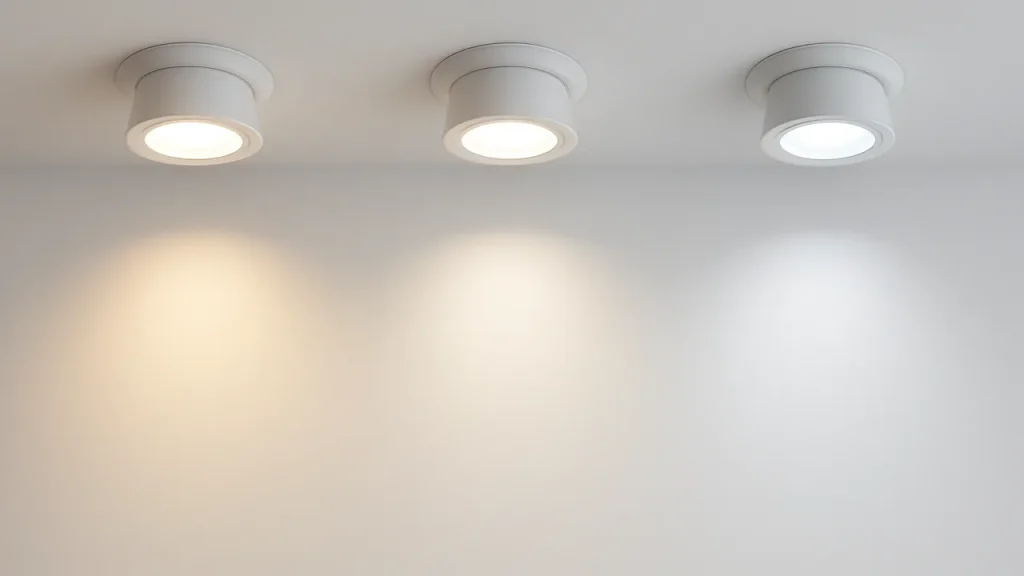
Neutral white light is the colour most people end up wanting once they have tried the other two. Warm white can feel sleepy in a shop. Cool white can feel like a hospital corridor at home. Neutral white sits in the middle, around 4000K, and it is the safe default for offices, kitchens, classrooms, showrooms and most working spaces. But “neutral white” is a label, not a measurement, and two bulbs sold under that name can look quite different on the wall. This guide explains what the label really means, how to choose between 3000K, 4000K and 6500K, and what to check on the box before you buy for a home, shop, office or warehouse in Hyderabad.
What neutral white light actually is
Colour temperature is measured in kelvin (K). It describes the shade of white the lamp gives off, not how hot the lamp gets. The lower the number, the warmer and more yellow the light. The higher the number, the cooler and bluer it looks.
In everyday lighting you will meet three bands. Warm white is about 2700K to 3000K, the soft yellow glow of an old filament bulb. Neutral white, which some makers call natural white or day white, is about 3500K to 4500K, with 4000K being the most common value. Cool white, also sold as daylight or cool daylight, is about 5700K to 6500K, which looks crisp and slightly blue.
Many Indian brands print three simple labels on the carton: 3000K, 4000K and 6500K. That is why a lot of people search for neutral white as a single product. In practice you are choosing 4000K from a range that also offers a warm and a cool option. If you can pick up two cartons side by side in the shop, switch them on and look at a white wall under each. The difference is obvious in a few seconds, and it is the best test there is.
Neutral white vs warm white vs cool white
| Type | Typical value | How it feels | Best for |
|---|---|---|---|
| Warm white | 2700K to 3000K | Soft, yellowish, relaxed | Bedrooms, dining, lounge, restaurants, boutiques |
| Neutral white | 3500K to 4500K, usually 4000K | Clean, balanced, easy on the eye | Offices, kitchens, shops, study rooms, corridors, classrooms |
| Cool white | 5700K to 6500K | Bright, bluish, alert | Warehouses, workshops, parking, bathrooms, task areas |
The point of the table is not to lock you into a rule. It is to give you a starting point. Taste matters, and so does the paint colour, the floor, and the daylight that comes through the window. A south-facing room with a lot of sun may look fine with warm white in the evening and wrong in the afternoon.
Why the number on the carton is not enough: CRI
Two LED lamps can both say 4000K and still show colour differently. The reason is the colour rendering index, or CRI. CRI is a score out of 100 that tells you how faithfully the lamp shows the colours of objects compared with natural light. A low CRI makes red clothes look dull, skin look grey and food look flat. A high CRI makes them look right.
For a home, a CRI of 80 or more is a sensible minimum. For a shop selling clothes, jewellery, furnishings or food, look for 90 or more. For a warehouse or a parking area, colour accuracy matters less and efficiency matters more, so a CRI near 70 to 80 is acceptable. Do not accept a lamp with no CRI printed anywhere. Reputable brands put it on the carton or in the data sheet, and if it is missing, ask for the sheet.
The other number that matters is luminous efficacy, shown as lumens per watt. A good LED gives you a lot of light for each watt. Do not judge by watts alone. A 9W lamp from one maker can give noticeably more light than a 9W lamp from another. Compare lumens, then compare price.
How much light a room needs
Colour temperature tells you the shade. Lumens and lux tell you how much light. Lux is the amount of light that reaches a surface, measured in lumens per square metre. The National Building Code of India and the lighting standards that go with it give recommended levels for different uses. The table below gives commonly used target levels. Treat them as a guide, because the exact value depends on the task, the age of the people using the space and the reflectance of the walls.
| Space | Typical target (lux) | Suggested colour |
|---|---|---|
| Living room | 100 to 200 | 3000K for evenings, 4000K if used for work |
| Bedroom | 100 to 150 | 3000K |
| Kitchen | 200 to 300 | 4000K |
| Study or home office | 300 to 500 | 4000K |
| Office floor | 300 to 500 | 4000K |
| Retail shop floor | 300 to 500 and above for display | 4000K, with 3000K accents |
| Warehouse aisle | 100 to 200 | 5700K to 6500K |
| Workshop bench | 300 to 500 | 5000K to 6500K |
| Corridors and stairs | 50 to 100 | 4000K |
To turn lux into lamps, use a simple method. Multiply the floor area in square metres by the target lux, and divide by the lumens you expect to reach the floor. As a rough rule use about half of the lamp lumens, because of losses in the fitting, the walls and the angle of the light. For a 12 square metre office needing 400 lux, you need about 4,800 lumens at the work surface, which means around 9,600 lumens installed. That could be four 2,400 lumen panels. The numbers are only a first pass, and a lighting plan from the supplier will refine them, but doing the sum yourself stops you from buying far too few or far too many.
Where neutral white works best
Kitchens. Food looks natural, work surfaces are easy to see and the light is not harsh. A neutral white downlight over the counter and a batten under the cabinet make a good pair.
Offices and study rooms. At 4000K the eye stays comfortable over a long day, which is why so many offices use neutral white panels. Warm white tends to make people drowsy over long hours and 6500K can feel tiring on a screen day.
Shops and showrooms. A general layer at 4000K shows products clearly, and a few warm spots (3000K) on displays create contrast. Keep the mix controlled. Two or three colours in one small shop look messy.
Corridors, staircases and lobbies. Neutral white gives clear visibility without a clinical feel, and it works with most paint colours.
Classrooms and clinics. Enough brightness for reading and enough softness to avoid fatigue. A CRI of 80 or more is useful in a clinic where skin tone matters.
Where to choose something else
Bedrooms and dining rooms usually feel better in warm white, particularly in the evening. If your main light in the bedroom is 6500K, you will notice how alert it makes you feel at ten at night, which is the opposite of what you want.
Warehouses, parking, workshops and outdoor areas favour cool white. The extra bluish light seems brighter to the eye at the same lumen output, which helps in places where visibility matters more than ambience. It is also common to use cool white for bathrooms where people want crisp light for shaving or make-up, although a mixed approach, with neutral white at the mirror, often works better.
Where a space is used for both work and rest, such as a home study that is also a guest room, consider a tunable fixture or two separate circuits. A lamp that can step between 3000K and 6500K lets one fixture serve both.
Choosing the fitting: panel, downlight or batten
The colour temperature is half of the decision. The fitting is the other half.
LED panel lights give a flat, even glow and suit false ceilings in offices, clinics and shops. They are slim, fit in a grid and spread the light well. Look at our Panasonic LED panel lights if you are lighting an office floor or a retail space.
Downlights concentrate light on a smaller area and are used for kitchens, corridors, living rooms and as accent lights. Check the cut-out size and the beam angle before you buy, because a narrow beam leaves dark patches between fittings. Our Panasonic downlights come in a range of wattages and cut-outs.
LED battens are linear fittings for corridors, garages, workshops, retail shelves and any place where a tube light used to hang. They are simple to install, work with 4 foot and 2 foot lengths and replace old tubes without much effort. See the Panasonic LED battens if you are replacing old tubes in a shop or a godown.
For a wider choice across brands and fan ranges, our lighting and fans category lists everything we stock.
Mistakes to avoid when buying neutral white LEDs
Judging by watts. An LED label that says 12W tells you the power it uses, not the light it gives. Check lumens.
Ignoring CRI. A cheap lamp with low CRI will make a shop look dull and make food and clothes look off. This costs you sales and you will not know why.
Mixing colours in a single room. A neutral white panel next to a warm white downlight looks like a mistake unless it was planned. Keep one main colour per space, and use a second only as an accent.
Mismatched batches. LEDs from different batches can differ slightly in colour. Buy all the lamps for a room together, and keep a spare in the same batch for replacement.
Poor drivers. The driver is the small box that converts mains power to the low voltage the LED needs. A weak driver causes flicker, which causes headaches and shows up on phone cameras. Look for a driver with a stated power factor and, where possible, a flicker-free claim from a known maker.
Overlooking heat. LEDs run cooler than old lamps but still need to shed heat. A downlight crammed into a thin ceiling void without space to breathe will age faster. Give each fitting a little room.
Buying unbranded to save a little. A lamp that fails in six months is more expensive than one that lasts five years. If you need a lot of fittings, ask for a project quote on a branded range rather than picking up unmarked stock.
How to test before you commit
You do not need a lighting lab. Take a sample lamp in each colour and try three things. Put it over a white sheet of paper and look at the shade. Hold up something coloured, such as a red cloth or a green leaf, and see whether the colour looks natural. Put it where the room’s light will fall on your face and see whether you look healthy or pale. These three checks take five minutes and will tell you more than a brochure.
If you are fitting out a shop, hang the sample at the real height. A lamp that looks fine at arm’s length can look different at three metres.
Neutral white and your wiring and switches
A point that rarely gets mentioned. Lighting colour affects how finishes look, including the switch plates and the wall. A bright white modular plate under 6500K light looks bluish and clinical, while the same plate under 3000K looks creamy. If you are choosing plates and lamps for the same room, look at both under the lamp you plan to use. Your electrician can help you place the points, and our team can pair the lighting with the right switch range from the modular switches section.
Also think about control. Dimmers work with dimmable LED drivers only, and a non-dimmable lamp on a dimmer will flicker or hum. If you want to dim a living room, buy dimmable lamps and a dimmer rated for LED loads, and do not assume any LED will do.
Replacing old tube lights and CFLs
Many shops and godowns still run old fluorescent tubes. A move to LED battens cuts power use sharply and gives instant full brightness. When you replace, match the colour you were used to. An old tube sold as cool daylight is around 6500K, and a tube sold as white is often 4000K. If you want the same feel, buy the same Kelvin. If you want a cleaner, more modern look, move to 4000K and see whether staff prefer it. Replace in whole rows, not one fitting at a time, so the colour stays even.
Buying LED lighting in Hyderabad
Hyderabad’s heat matters in practice. Fittings in an unventilated false ceiling or in a tin-roofed godown run hotter than the rated ambient, and cheap drivers fail first. Ask for the operating temperature range of the fitting, and prefer a branded range with a stated warranty for any space that gets hot.
Voltage can also be uneven in older areas of the city. If you see lights flicker when a heavy appliance starts, a protective device or a better driver can help. For a shop, a short call with our team in Rasoolpura can sort out the right fitting before you order twenty of the wrong one.
For larger orders, ask for a lux plan. Give us the room size, ceiling height and use, and we can suggest the number and type of fittings for a given lux level. We also share current price lists on our price lists page so you can budget before you visit.
A quick buying checklist
- Pick the colour for the use: 3000K for rest, 4000K for work, 6500K for utility.
- Check CRI: 80 or more for homes and offices, 90 or more for retail where colour matters.
- Compare lumens, not watts.
- Choose the fitting by the room: panel, downlight or batten.
- Buy all lamps for one space from the same batch.
- Test one sample in the real room before ordering the full quantity.
- Ask for the warranty and the driver details.
Frequently asked questions
What Kelvin is neutral white light?
Neutral white light is usually around 4000K, within a range of roughly 3500K to 4500K. It sits between warm white at 3000K and cool white at 6500K, and it looks clean and balanced rather than yellow or blue.
Is neutral white better than warm white for a home?
It depends on the room. Neutral white suits kitchens, study rooms and workspaces. Warm white suits bedrooms, dining areas and lounges, where you want a relaxed mood. Many homes use both, one per room.
Is 4000K the same as natural white or day white?
Brands use these names loosely. Natural white and day white often mean about 4000K, but some brands use day white for 6500K. Always check the Kelvin value printed on the carton instead of relying on the name.
Which light is best for an office, neutral white or cool white?
Neutral white at 4000K is the usual choice because it stays comfortable over long working hours. Cool white at 6500K can feel harsh on screens, and it is better for warehouses, workshops and parking areas.
What CRI should I look for in LED lights?
For homes and offices, choose CRI 80 or more. For shops selling clothes, jewellery or food, choose 90 or more so that colours look true. For warehouses and outdoor areas, a lower CRI is acceptable.
How many lumens do I need for a room?
Multiply the room area in square metres by the target lux, then roughly double it to allow for losses. A 12 square metre office at 400 lux needs about 9,600 lumens installed. Your supplier can refine this with a lighting plan.
Can I mix neutral white and warm white in one room?
You can, but it should be planned. A neutral white general layer with warm white accent lights can work in a shop or living room. Random mixing looks like a mistake.
If you are lighting a shop, an office or a home in Hyderabad and want help choosing the colour, wattage and fitting, talk to the team at eNarayan Elex in Rasoolpura. Browse our lighting and fans range or send us your room sizes and we will suggest a plan.
